As policymakers, businesses, researchers and civil society leaders gather at the 2026 Asia-Pacific Regional Conference on Population Ageing, the Silver Economy has emerged as one of the region’s most important opportunities and challenges.
While discussions often focus on the growing spending power of older consumers, building a truly inclusive Silver Economy requires a broader perspective, one that recognises older people as workers, entrepreneurs, caregivers, volunteers and active contributors to society.
In this article, Philip O’Keefe (co-lead of the Silver Economy sub-theme at the Asia conference) explores the different layers of the Silver Economy and what governments, businesses and communities must do to ensure its benefits are widely shared.
The Silver Economy in Asia is taking off. As populations age rapidly, governments, businesses and society at large are starting to realise the enormous economic opportunities associated with older consumers.
The market opportunities around older consumers are real and already substantial. Estimates of silver consumption in the region run into trillions of dollars, and include nearly every consumer sector, from health and aged care to financial services, housing, hospitality and leisure, food and beverage, and technology. And the silver consumer market will grow rapidly as the number of older people increases, incomes rise, and businesses get better at understanding the needs and preferences of older consumers.
And it is not just the direct value of the consumption of older people that matters. That consumption generates a much bigger economic footprint: among the firms that supply the goods and services they consume, the suppliers from whom those firms source inputs all along the supply chain, and the spending of the many workers in those firms.
But the justified excitement around the Silver Economy in the region risks missing the full story if it is seen simply as an expanding market of older consumers waiting to be tapped. Older people are not just consumers and the Silver Economy is more than a consumer market niche.
So what do we need to think about when we talk about the Silver Economy? There are several layers to the story.
Financial security: the foundation of the Silver Economy
An obvious starting point is financial security at older ages. The Silver Economy is driven by older people who have money to spend and sufficient confidence about the future to spend it. Supply cannot exist without demand. At present, that financial foundation remains uncertain for many older people in Asia. Contributory pension coverage remains patchy, and social pensions are often modest. Many are reaching old age with limited savings and assets, and sometimes significant debt. While there has been good progress towards universal health coverage, out-of-pocket health spending remains significant and long-term care systems are nascent in much of the region. This can mean overly high precautionary savings and reluctant consumers.
The reality is that many older people in Asia remain outside the so-called “consumer class”. The Silver Economy will not reach its potential without greater financial security in later life.
Older people as producers and contributors
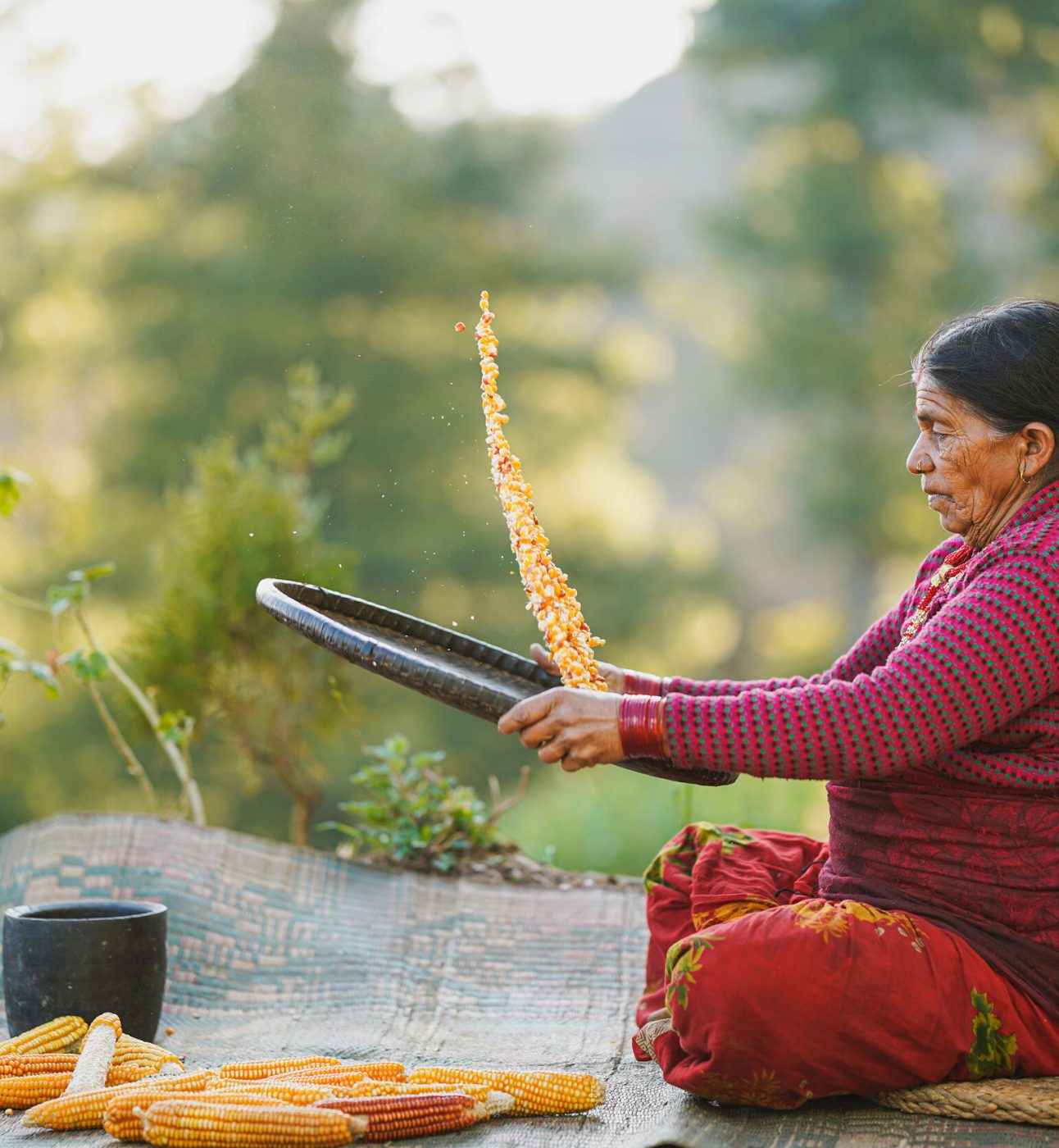
Second, a more inclusive vision of the Silver Economy also considers older people not only as consumers but as producers. Across Asia, hundreds of millions of people continue working well into old age – as business owners, employees, farmers, and entrepreneurs. Others generate enormous economic and social value through non-market activities such as caring for grandchildren and spouses, volunteering in their communities, transmitting knowledge and experience, and sustaining social networks.
But older workers often face policy, operational and attitudinal challenges in the labour market which limit their opportunities to contribute as productively as possible for as long as they choose. And the social contributions of older people are often not fully recognised or supported.
Creating an enabling environment
Third, a holistic vision of the Silver Economy takes into account the enabling institutions, policies and social conditions which support or inhibit its growth. These include:
labour market policies, employer attitudes and practices, and broader societal attitudes to the mature workforce
the coverage, adequacy and sustainability of pension, health protection and long-term care systems
industrial policies which incentivise businesses to innovate and supply the silver consumer market
openness of the financial sector to supporting Silver Economy businesses and older entrepreneurs
how societies recognise and value the non-market contributions of older people.
Taken together, these factors show why we need to look beyond older people as consumers and invest in the wider ecosystem that allows the Silver Economy to thrive.
Ensuring the Silver Economy is inclusive
Across all dimensions of the Silver Economy, there are important equity challenges as well. Without robust public policies, ageing cohorts tend to become more unequal: between rural and urban populations, men and women, formal and informal workers, people with and without assets, and “younger old” and “older old” people. Without supportive institutions and smart public policy, significant shares of older people will not be active contributors to the Silver Economy, and it risks catering only to affluent older people.
Building the foundations across the life course
Nor is the Silver Economy only about old people. A thriving Silver Economy is shaped by decisions, policies and opportunities across the life course. Whether someone reaches older age healthy, financially secure, and able to contribute economically as a consumer and a producer is determined over many decades. A thriving Silver Economy does not begin at age 60 but builds on foundations across life. It is a crucial part of the wider societal adaptation to increased longevity.
A shared responsibility
Building the foundations of the Silver Economy is not just the responsibility of governments. Employers, financial institutions, communities, families and older people themselves all have roles to play. Achieving this will require a shift in mindsets and collaborative action, recognising the economic and social value that longer lives can bring.
Signs of progress across the region
The encouraging news is that a number of governments in Asia already recognise the potential of the Silver Economy and the elements that are required for it to thrive.
China’s State Council has adopted one of the most comprehensive policies globally to support and incentivise expansion of the Silver Economy.
Under the Philippines’ presidency, ASEAN has developed a draft Silver Economy Framework to catalyse and guide the initiatives of member states. Multiple governments have also introduced programmes to help extend productive working lives and thus enhance the purchasing power of older consumers.
And reforms of social policies, including social pensions and schemes for informal workers, expanded health insurance coverage, and setting the building blocks for formal long-term care systems, are aiming to enhance the financial security of people at older ages.
A glass half full or half empty?
So is Asia’s Silver Economy a glass half full or a glass half empty? The answer may be both.
The glass is half full because population ageing is already creating enormous economic and social value, with potential for major growth in coming decades. Longer, healthier and more secure lives can generate new markets, new industries and innovation, more productive lives, and more and better recognised social contributions of older people.
But the glass is also half empty in that the full potential of the Silver Economy in Asia is yet to be realised, and its fruits remain unevenly distributed. Fully realising that potential requires thinking beyond older people only as consumers and building the ecosystems that translate longer and healthier lives into greater financial security, higher productivity, enhanced social and economic participation and proper recognition of the contributions of older citizens.
An opportunity to shape a more inclusive Silver Economy
Realising the full potential of Asia’s Silver Economy will require action from governments, businesses, civil society and communities alike. As leaders and experts gather at the 2026 Asia-Pacific Regional Conference on Population Ageing, there is a unique opportunity to move beyond narrow discussions of older consumers and build a shared vision of a Silver Economy that is inclusive, equitable and benefits people of all ages.
About the author:
Philip O’Keefe is Professor of Practice at the Centre for Population Ageing Research (CEPAR) at the University of New South Wales, where he leads policy research on societal ageing in Asia. His work spans a wide range of issues, including public finance, labour markets, social protection, health and care, and the silver economy.
Before joining CEPAR, Philip spent nearly three decades at the World Bank, most recently as Practice Manager for Social Protection and Jobs in the East Asia and Pacific region, contributing to policy dialogue, research and development programmes across Asia, Europe and Central Asia, and South Asia.
Asia-Pacific Regional Conference on Population Ageing
The Asia-Pacific Regional Conference on Population Ageing brings together governments, civil society, researchers, international organisations, private sector leaders and older people to explore how societies can respond to this transformation.
Hosted by HelpAge International, UNFPA and the China National Committee on Ageing, the conference will take place in Hangzhou, China, from 27–30 October 2026, providing a unique opportunity to exchange ideas, share innovation and learn from experiences across Asia and the Pacific.