HelpAge works with older people to reduce the impact of HIV and AIDS.
HIV and AIDS policy
HelpAge works with older people to reduce the impact of HIV and AIDS.
Everyone has the right to access the HIV and AIDS information and the services they need.
This includes older men and women.
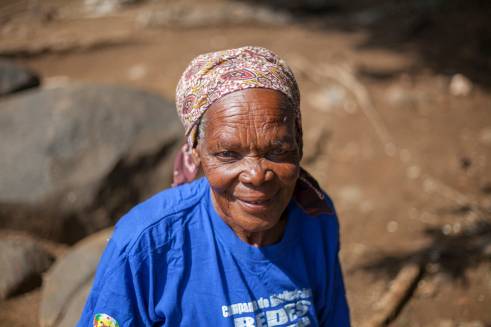
HIV affects older people in a number of ways:
- HIV is ageing. Increased access to antiretroviral therapy (ART) means people can now live into older age with HIV. People are also newly infected in older age. This is leading to a large and growing number of older people living with HIV. Yet services are rarely targeted towards them.
- Older people around the world support and care for loved ones living with HIV and children orphaned as a result of AIDS. This has a huge impact on their economic, health and emotional wellbeing.
- It is often assumed that older people are no longer sexually active and therefore not at risk of HIV. Older people are at risk through the same routes as anyone else, and are often less likely to practice safer sex than younger people. Despite this, they are rarely included in HIV education.
What we want
- Recognition that the epidemic is ageing.
- Research to understand the interaction between ageing and HIV, particularly on older people’s health and treatment adherence.
- Age-sensitive HIV prevention messages, developed with and provided by older people themselves.
- Access to HIV counselling, testing and treatment for older people and trained health workers that understand their needs.
- Recognition and support for older carers.
- Global HIV indicators that are inclusive of people of all ages, and national surveys and epidemic monitoring extended beyond the age of 49.
Our impact
Following our policy influencing work:
- UNAIDS published “HIV and Aging” in 2013, publishing the first estimates of the number of people aged 50 and over living with HIV globally and in each region of the world. The 2014 UNAIDS “Gap Report” recognised people aged 50 and over as a population group being left behind.
- The 2014 WHO Global Update on the Health Sector Response to HIV highlighted the need for HIV prevention and other services to respond to older people’s needs, and discussed issues older people face in relation to treatment.
- The Southern Africa Development Community (SADC) Orphans and Vulnerable Children and Youth Minimum Package Document and Business Plan states that social protection measures should translate into increased resources for older carers.
- The HIV and AIDS Policy in Tanzania and Strategic Plan for Intensifying Multi-Sectoral HIV and AIDS Response in Ethiopia both include recognition of the impact of the epidemic on older people.
- Kenya has extended its 2007 and 2012 AIDS Indicator Surveys to include people up to 64. The surveys provide data on HIV prevalence, with the change from 2007 to 2012 demonstrating the increasing number of older people living with HIV.